
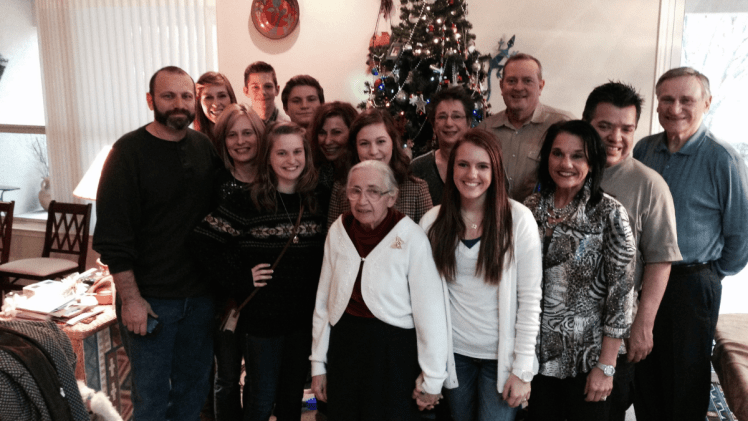
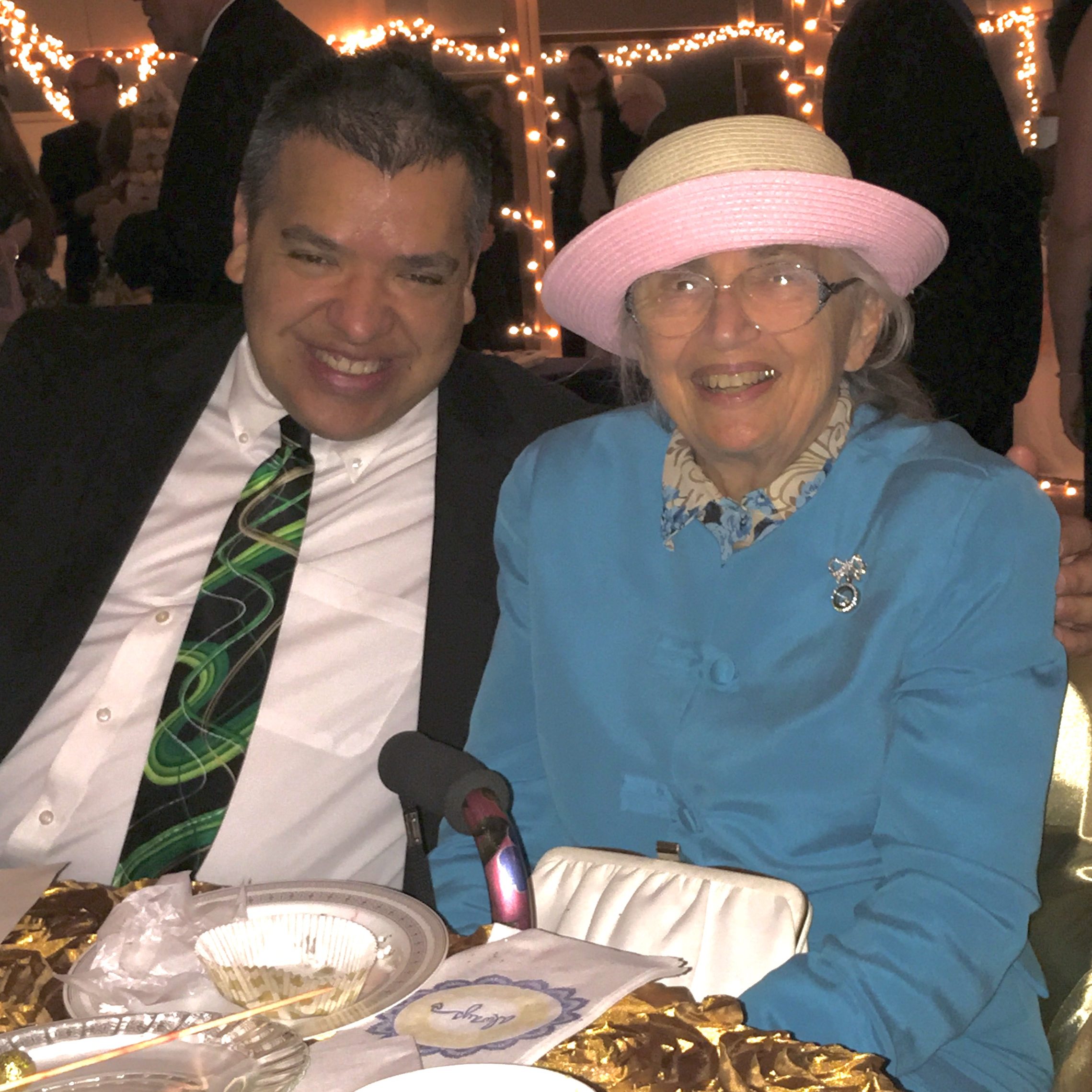
“My mom was one of those people that everybody had a place at the table. There were no strangers. My sisters, brothers and I could bring home anybody, and there was always room to make another place at the table. It’s the kind of person she was. Everybody was family,” shared Rosemarie Marshall, a new resident to the Charlotte area. “And, as the disease took hold of her. He [my dad] started seeing her lose the ability, not just to remember her family, but to remember who she was. It was really, really hard.”
Sadly, this wasn’t the first experience with Alzheimer’s or dementia for Rosemarie and her family. Both her maternal great grandfather and grandmother had lived with the disease. She recalls stories that were relayed of her great grandfather taking walks with his name and address pinned to his coat so that “people in the neighborhood would bring him home if he got disoriented.”
Rosemarie was in her thirties when her grandmother was diagnosed. “My grandmother was studying to be a concert pianist when she met my grandfather. She gave up her concert career to get married and raise a family, but she always had her music,” beams Rosemarie. She “could hear something and was able to play it. She could read music and taught all of us how to play the piano.” As the disease progressed, Rosemarie vividly recalls her sitting in front of the piano that she once loved, but not knowing what to do. Rosemarie reflects, “The saddest thing with my grandmother was that as Alzheimer’s took hold of her, she lost her music.”
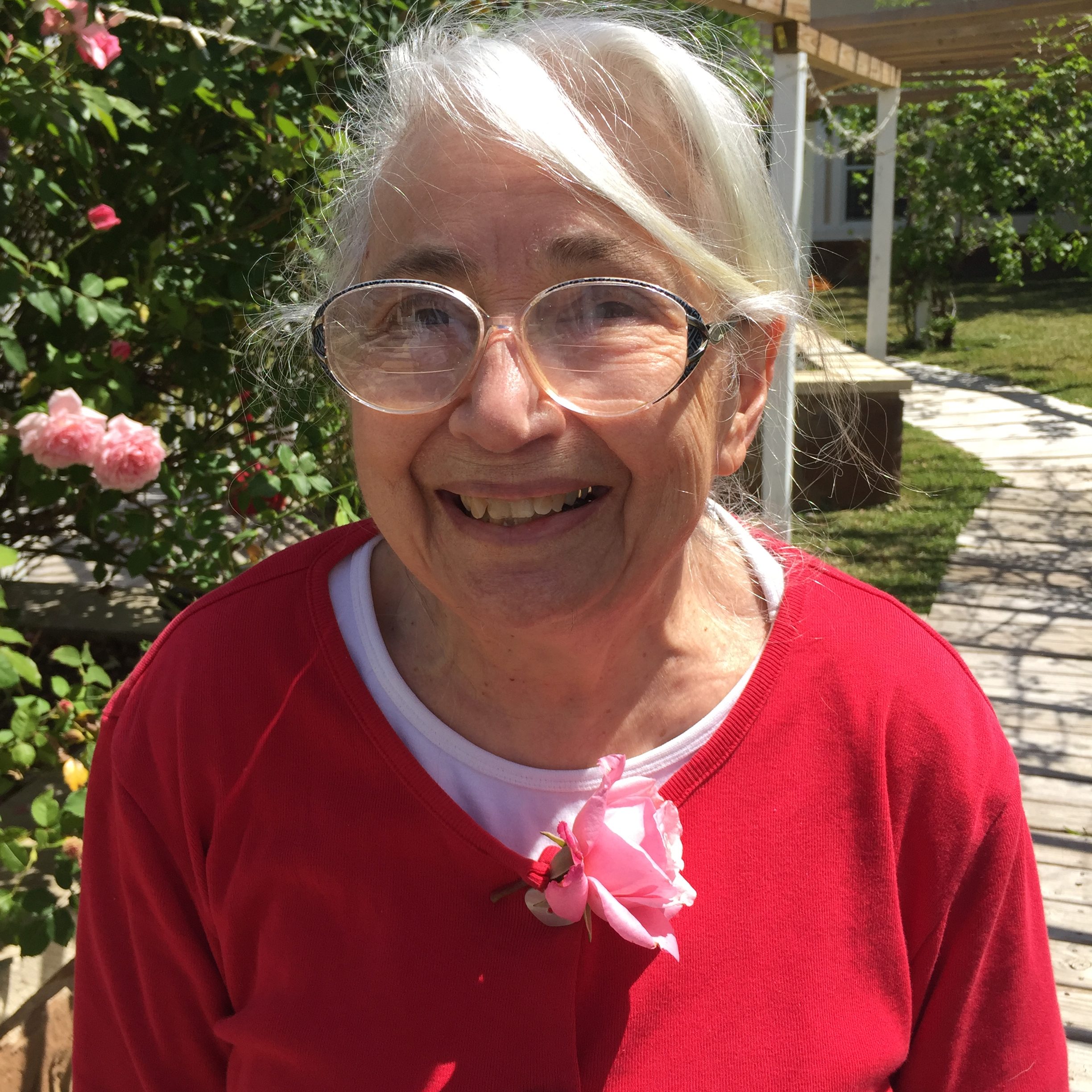
Rosemarie’s mom, Camille, did not inherit her mother’s musical talents, but loved arts and crafts, including needlework and crochet. She was also an avid reader and she enjoyed doing word searches and crossword puzzles. “My mom was brilliant in some ways. She was trained as a chemist and worked in the research labs for Colgate-Palmolive, in fact, that’s how she and my dad met,” reminisces Rosemarie. As many women did at the time, her mom stayed at home after having children, but “she was always busy.” Rosemarie had fond memories of her volunteering in the school library and remembered “spending the summer helping her get new books, type up library cards, and paste envelopes into the books.” After her parents retired, they spent time volunteering with Habitat for Humanity. Camille also mentored several young ladies in junior high school and served as a hospice volunteer for many years.
Camille was diagnosed in 2012, and looking back, Rosemarie recalls early signs that she was having some difficulty, but they chalked it up to “mom being mom.” One of the first was “when she would call us on the telephone. She really didn’t know who she was talking to. And, I recognized it by the fact that she had this maniacal laugh when she didn’t understand something or somebody.”
Rosemarie felt like there was something more going on when her mom “insisted that she didn’t know how to get to my sister’s house and wanted to meet her at the highway.” Though Rosemarie and her siblings lived several hours from her parents, her mom never hesitated to jump in the car to drive to Dallas or Houston to spend time with her family and grandkids. Having made the trips hundreds of times, it was scary to all of a sudden think she didn’t have the ability to drive. It wasn’t long after that conversation, Rosemarie’s dad, Vic, took her for a cognitive assessment.
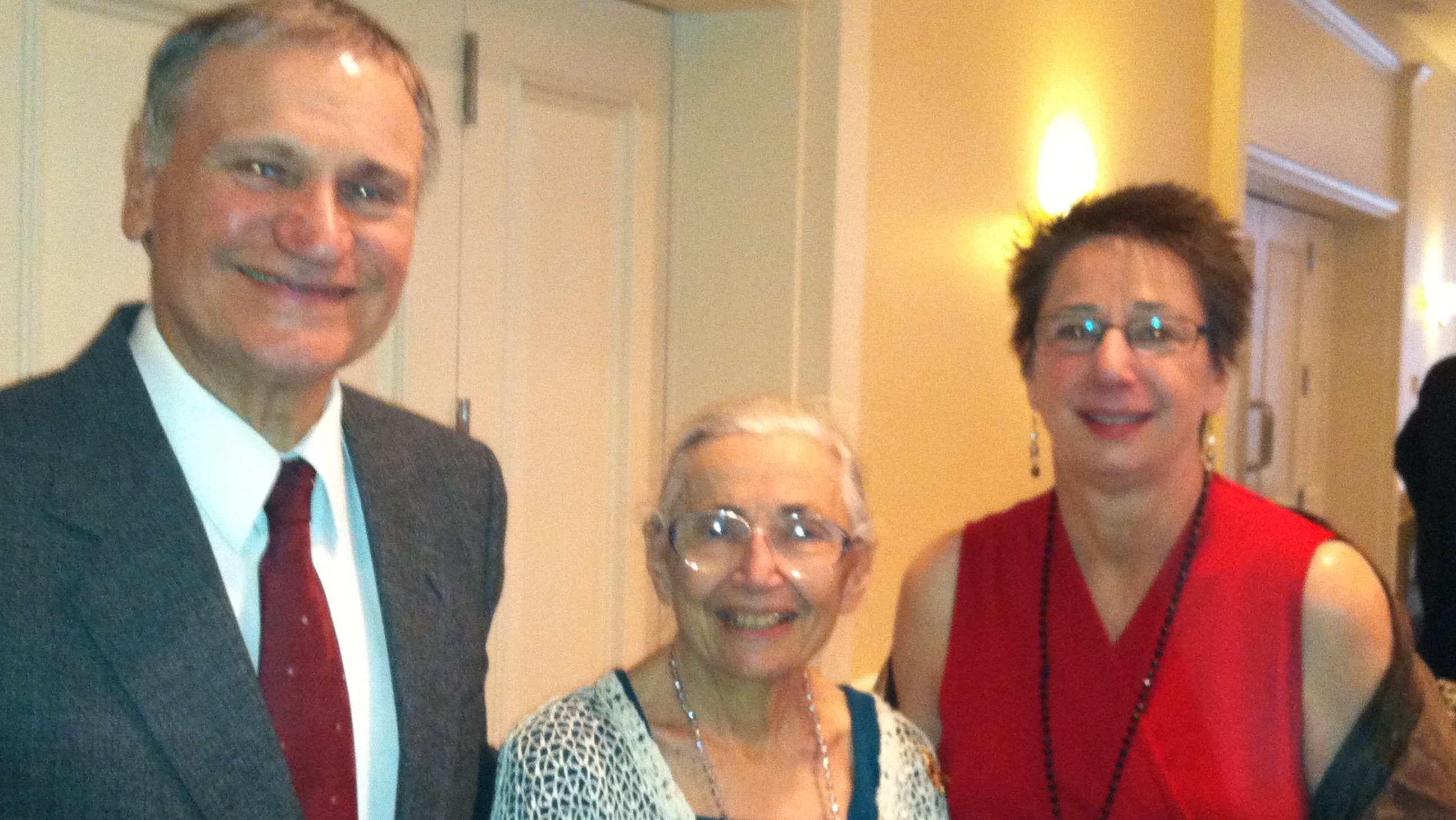
After the diagnosis, Rosemarie said, “My dad changed in a good way. He learned patience, which he never had. And, because my mom could no longer do things like buy birthday cards or Christmas gifts, he was the one that started doing all of that. And, in a very strange way, we all became much closer to my dad.” She shared that she saw a change not only in the way he interacted with her mom, but the way he interacted with all of them. Her dad was having to fill the role that her mom once did.
Though her dad didn’t cook, he began “taking over more and more of the cooking. And, my mom used to say, ‘Yeah, he’s cooking now.’ Rosemarie laughs, “As if she had planned it.”
As the disease progressed, Camille would tell stories that the family knew were untrue and struggled to do these things she once loved to do. She would hold a book as if she was reading, but the book would be upside down. She would work on word searches, but only random letters would be circled. Rosemarie said, “it was like she knew what she had to do, but she didn’t know how to do it correctly or could no longer make those connections.”
Rosemarie shared concern for her dad, who had become a full-time caregiver at 80 years old. He was “setting an alarm because she would wander at night and all of a sudden be outside in her nightdress, walking down the street.” Her dad could no longer physically care for her and none of her siblings lived in the same town, which made it difficult for them to help. So she was supportive when he found a community to help provide care.
After Camille passed, Vic was inspired to do something to help others that were on a similar journey. He helped start a nonprofit, A Gift of Time, in Georgetown, Texas to provide respite care specifically for those with Alzheimer’s. Vic leads Camille’s Memory Cafe, which provides a dynamic, interactive way for the community of loved ones living with dementia, caregivers, family, and friends to connect.

Admittedly, Rosemarie is concerned about her and her sibling’s future in that Alzheimer’s disease can be inherited and her family history speaks to that. Rosemarie reflects, “It’s personal. I don’t know if there’s a possibility that myself or my brothers and sisters could wind up with it.”
Because of the experience with her mom and for her own future, Rosemarie and her husband first participated in the Walk to End Alzheimer’s in Dallas, Texas as they were living there at the time. They did that for several years and also participated in the Alzheimer’s Association’s AIM Advocacy Forum in Washington, D.C., which she described as “absolutely amazing.” During the pandemic, they moved to Charlotte and in 2022, they participated in the Walk to End Alzheimer’s – Charlotte. It was after that Walk that Rosemarie decided to get more involved and joined the Walk Committee.

Rosemarie is team captain of their Walk Team called Amwins Group, which raised over $7,400 last year and is aiming for $10,000 this year. The team focuses mostly on personal fundraising through social media, emails to family and friends, as well as, participating on Walk Day, October 21 at Truist Field in Charlotte. For Rosemarie, the ability to share stories and experiences has been a big part of her connection to the Walk and to the Alzheimer’s Association. “I have met some wonderful people who I find very inspiring. We share a really hard reality. Their stories are much harder than what my family went through – not that there weren’t challenges with what we’ve been through. But, my parents had resources. They had insurance. We had family. And, at least some understanding, because we had gone through it with my grandmother, although years ago.”
So for Rosemarie, there’s room for everyone at the table when it comes to supporting families impacted by Alzheimer’s and other forms of dementia. There are no strangers, and there was always room to make another place at the table.
LIKE ROSEMARIE, WE ALL HAVE A REASON TO FIGHT FOR A WORLD WITHOUT ALZHEIMER’S DISEASE. Join your local Walk to End Alzheimer’s today as an individual, team, or sponsor.
The Alzheimer’s Association hosts 17 walks across North Carolina. The Alzheimer’s Association Walk to End Alzheimer’s is the world’s largest event to raise awareness and funds for Alzheimer’s care, support and research. Since 1989, the Alzheimer’s Association® mobilized millions of Americans in the Alzheimer’s Association Memory Walk®; now the Alzheimer’s Association is continuing to lead the way with Walk to End Alzheimer’s. Together, we can end Alzheimer’s.
| Alamance County | 9/30/2023 |
| Asheville | 10/14/2023 |
| Charlotte | 10/21/2023 |
| Fayetteville | 10/28/2023 |
| Gaston/Cleveland/Lincoln | 10/14/2023 |
| Guilford County | 10/7/2023 |
| Henderson County | 9/30/2023 |
| Iredell County | 9/23/2023 |
| Jacksonville | 10/14/2023 |
| Moore County | 9/30/2023 |
| Mount Airy | 9/9/2023 |
| New Bern | 10/21/2023 |
| Rowan-Cabarrus | 10/28/2023 |
| Unifour (formerly Hickory) | 10/28/2023 |
| Triangle (Raleigh-Durham) | 10/7/2023 |
| Wilmington | 11/4/2023 |
| Winston-Salem | 11/4/2023 |
 Alzheimer's Association North Carolina Blog