
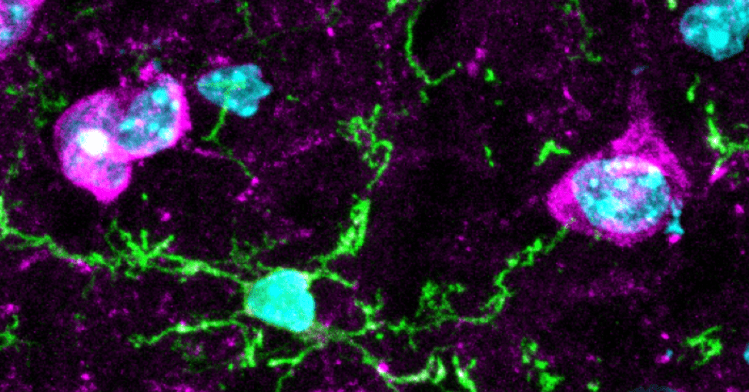
The Alzheimer’s Association is the largest funder of dementia research, and we are seeing tremendous progress in better understanding and helping to treat the disease thanks to this research. North Carolina is home to some of this valuable research happening, including one recent research grant awarded to Nicole Scott-Hewitt, PhD, assistant professor of cell biology at Duke University School of Medicine in Durham. Her lab is investigating how the immune system and nervous system can impact the brain and its connection to Alzheimer’s disease.

Dr. Nicole Scott-Hewitt, assistant professor of cell biology at Duke University School of Medicine, has been awarded a research grant from the Alzheimer’s Association, the world’s largest nonprofit funder of dementia research. Her work is focused on a fascinating and increasingly important question: How does the immune system influence brain health and cognitive decline?
Dr. Scott-Hewitt’s journey into neuroimmunology began during her graduate studies at the University of Rochester in New York. There, while studying the effect of rare inherited diseases in the brain, she discovered the essential role immune cells were playing in clearing harmful substances. But when those cells are compromised, the consequences can ripple throughout the body – including the brain. As a postdoctoral fellow with Dr. Beth Stevens at Boston Children’s Hospital, she continued to investigate these interactions and uncovered how various immune signals contribute to brain health and function.
That early experience sparked a passion for understanding how immune dysfunction might contribute to neurological diseases like Alzheimer’s.
Now at Duke, Dr. Scott-Hewitt is diving deeper into this connection. Her lab is studying the crosstalk between brain cells and immune cells, and what happens when the immune system isn’t working properly. Could this dysfunction trigger changes in the brain that leads to Alzheimer’s disease?
“We know that immune molecules exist in the brain,” she explains. “We’re investigating how cells respond to environmental influences and how those changes might contribute to declining cognitive function.”
For Dr. Scott-Hewitt, this research is more than academic—it’s personal. She lost her paternal grandmother to younger-onset Alzheimer’s disease.
“I was robbed of a relationship with her because of this disease,” she says. “I’m committed to understanding how this happens so we can develop therapies that target specific neurons and molecules.”
Her ultimate goal? To uncover how immune system dysfunction may contribute to Alzheimer’s in people without a genetic predisposition. If successful, her findings could lead to new therapies that prevent the buildup of harmful plaques in the brain—potentially slowing or even preventing cognitive decline.
This research is a powerful reminder of the progress being made in the fight against Alzheimer’s – and the passionate scientists behind it.
 Alzheimer's Association North Carolina Blog