

By Sarah Osment
Alzheimer’s is not a stranger in my household. Growing up, I remember 15-minute car rides with my Nanny, Lillian Lacy, where she would comment, “The corn sure is getting high,” no less than 15 times. (My parents live near Mennonite farms.) I remember the emotions of moving my grandparents to a home and, a few years later, moving my Nanny to the memory care unit. I remember how it became increasingly more challenging to visit as I could see the personality of my Nanny drifting farther and farther away.
What I remember most, though, is the emotions I saw on my mom and her sisters through it all. The heartache and sadness were hard to fully comprehend as a child and later a young adult. For all the heartache I felt, I had really only truly known a Nanny untouched by disease for my first few years of life. My mom and her sisters had been raised by her – a woman who was once Valedictorian of her high school and Salutatorian of her university class in the 1940s.
I think that may be why when we first saw signs of the disease on our doorsteps again, my family and I tried to dismiss it. “She’s just stressed,” we said. “She’s just getting older,” we thought. We avoided the painful truth until it couldn’t be ignored anymore, that Alzheimer’s was now affecting my own Mom.
My mom, Karen Haas, had a passion for genealogy and tracing our family’s roots. She found comfort and belonging in knowing where we came from and our family’s stories. Having the summers at home with us kids as a Family and Consumer Science teacher, we would spend many days in libraries and cemeteries as she would thoroughly review her research and find no less than four pieces of proof (birth certificates, marriage licenses, etc.) for every individual in the family tree. She somehow found ways to make that fun and engaging for my sister and I – she sold it as investigating a mystery and a big scavenger hunt. Later, she would visit with distant cousins who were also researching genealogy and would share information to help each other in the process.
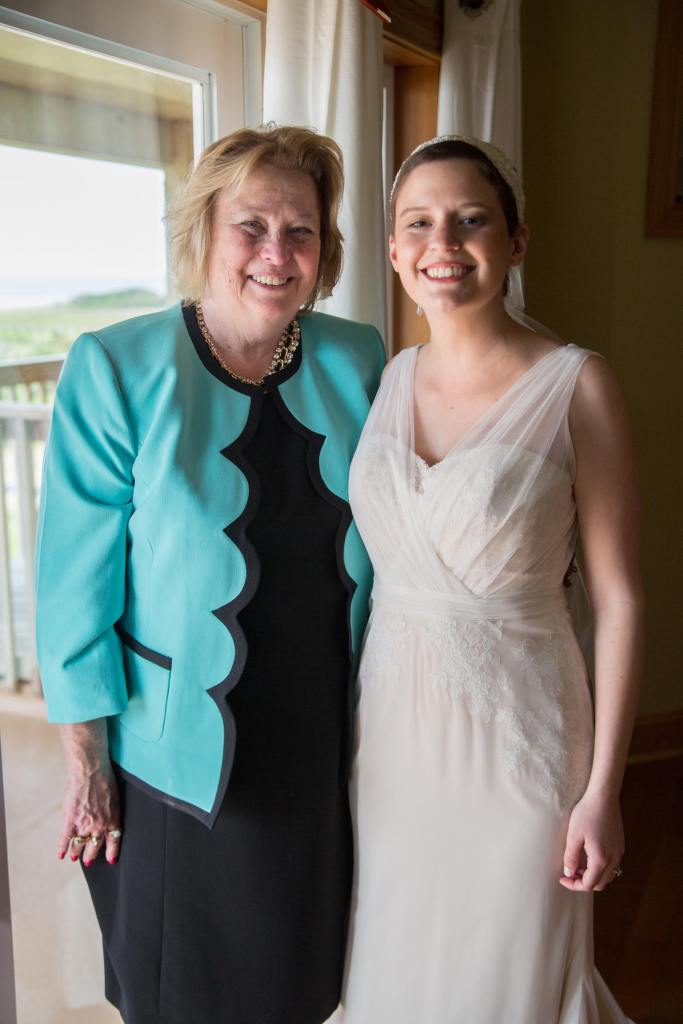
She traced one line back to immigrating to America to escape religious persecution in the Alsace-Lorraine region. This family line later includes the Mickley family, who fought in the Revolutionary War and transported the Liberty Bell out of Philadelphia and to a church in Allentown in their potato cart to save it from being melted down by the British. She traced another line back to fighting for the North in the Civil War. She deeply understood that we are a nation of immigrants, and she made me proud of it.
I include this background not only to paint a picture for my mom and her hobbies before this awful disease, but also to set the stage for a moment I, at the time, thought was years into the future.
My parents were visiting, staying at our house in Apex, N.C. for a long weekend with me, my husband, and our eight-month-old daughter. The trip was coming to an end, and we were spending the last afternoon on the back porch, playing with my daughter. My dad stepped inside to get a few last items together while my mom and I were talking about things coming up the following week. Soon she says, “Well, it has been lovely getting to know you. I can’t believe we’re cousins!”
She was quickly able to realize her mistake and understand, at least for a few moments, what just happened. That she had forgotten who I was.
We had seen the signs and, from experience, knew this moment was coming. But I truly thought it was years down the line.
Now, as my mom continues through the stage of Alzheimer’s, I feel the heartache of the disease in its full complexity.
Watching the mother who raised you go through such a horrible disease is gut-wrenching. My dad is the most patient and loving caregiver I have ever seen. It speaks volumes to the kind, amazing person he is and the strength of their relationship. I also cannot imagine the emotional pain he must be going through, as he puts on a brave face for us.
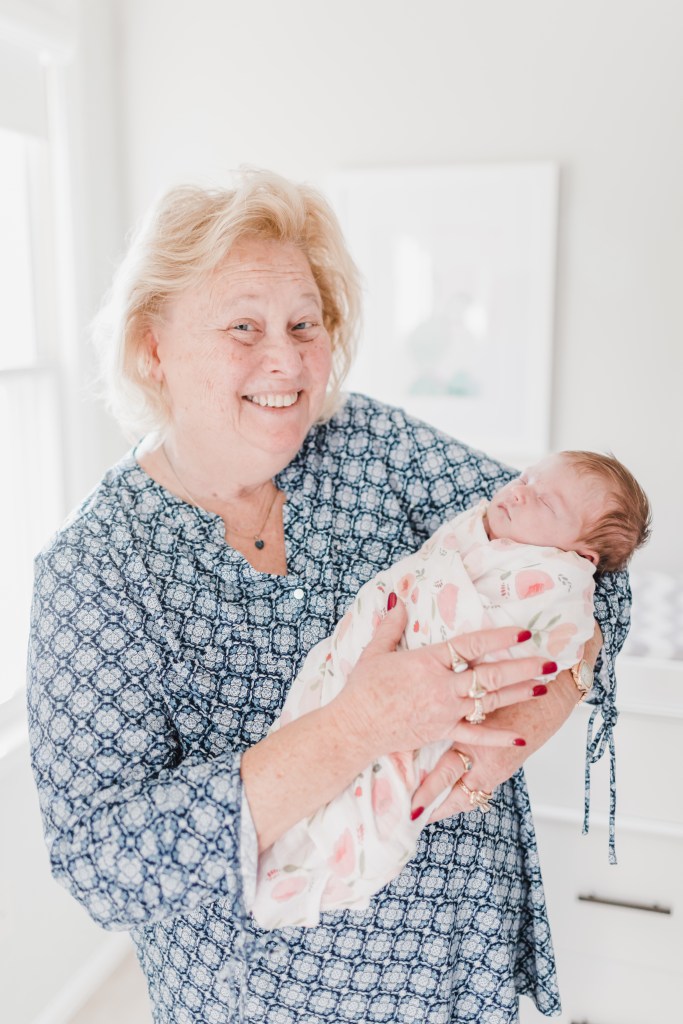
My two girls have never known a Nanny not touched by Alzheimer’s. Still, I am thankful that they are able to feel the love she has for them as her smile gets bigger and wider, and her body seems to come alive every time they walk in front of her.
When I first joined the Walk to End Alzheimer’s – Triangle on the marketing team in 2018, I joined in honor of my Nanny. The day of my first meeting would have been her 90th birthday. But in hindsight, I know I also joined in honor of my own mother, who we were seeing signs of the disease for but had not yet acknowledged. Today, I also know I continue to be involved with hope for the future.
There is a lineage ahead – including my sister and I, three daughters and a son between us. I sincerely hope we have no further experience with the disease, and I also know that we need science on our side.
Already since 2018, progress has been made. It is now much easier to see the benefits of early diagnosis as medications become possible and research yields new findings. My sister and I are watching closely and trying every possible avenue toward living a healthy lifestyle and testing early. The Alzheimer’s Association says we are “in a time of unprecedented promise in the quest to end Alzheimer’s,” and it’s one of the only times I’ve been glad to hear the word “unprecedented.”
We must continue to not only fund this vital research, but fast-track it. In a time when research is being defunded – $65 million is still paused for 14 of 35 NIH-funded Alzheimer’s Disease Research Centers (ADRCs), causing layoffs and frozen brain banks – we must continue to have hope, fight for funding, and take matters into our own hands as much as possible.
I say the reasons I Walk, but really I hope our research continues to Run toward the first survivor. My family’s future depends on it.

Sarah is a strategic communications professional with more than a decade of experience in media relations, content creation and social media. She’s served on the marketing committee for Walk to End Alzheimer’s – Triangle since 2018.
LIKE SARAH, WE ALL HAVE A REASON TO FIGHT FOR A WORLD WITHOUT ALZHEIMER’S DISEASE. Join your local Walk to End Alzheimer’s today as an individual, team, or sponsor.
The Alzheimer’s Association hosts 17 walks across North Carolina. The Alzheimer’s Association Walk to End Alzheimer’s is the world’s largest event to raise awareness and funds for Alzheimer’s care, support and research. Since 1989, the Alzheimer’s Association® mobilized millions of Americans in the Alzheimer’s Association Memory Walk®; now the Alzheimer’s Association is continuing to lead the way with Walk to End Alzheimer’s. Together, we can end Alzheimer’s.
Walk to End Alzheimer’s 2025 dates in North Carolina:
| Alamance County | 9/27/25 |
| Asheville | 9/27/25 |
| Charlotte | 10/18/25 |
| Fayetteville | 10/25/25 |
| Gaston/Cleveland/Lincoln | 10/11/25 |
| Guilford County | 10/25/25 |
| Henderson County | 9/27/25 |
| Iredell Co. & Lake Norman | 9/27/25 |
| Jacksonville | 9/27/25 |
| Moore County | 9/13/25 |
| Mount Airy | 9/20/25 |
| New Bern | 10/18/25 |
| Rowan-Cabarrus | 10/4/25 |
| Unifour | 10/25/25 |
| Triangle (Raleigh-Durham) | 10/4/25 |
| Wilmington | 11/1/25 |
| Winston-Salem | 11/16/25 |
 Alzheimer's Association North Carolina Blog