
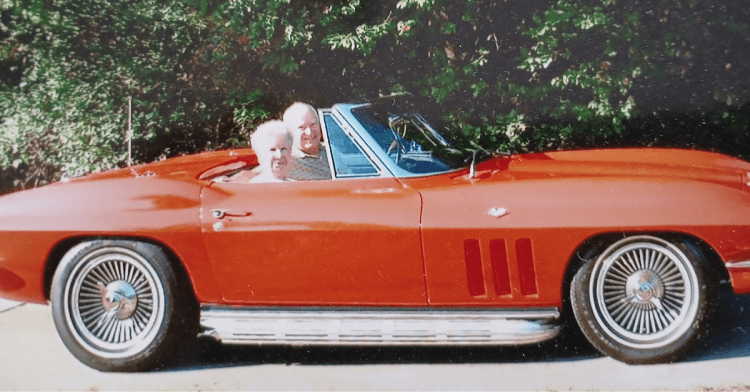
For Walter Nowicki, the earliest sign of his mother’s cognitive decline came during a cherished family ritual: playing cards. His parents, lifelong New Jersey residents, loved poker and blackjack. Every visit to Winston-Salem, NC with their grandsons, Robert and Michael, began with a deck of cards and a game for pennies.
“It was a ritual,” Walter recalled. “Every time we’d go up there, or they’d come down to visit, the first thing we’d do was get the deck of cards out and play.”
But one evening, his mother Lorraine looked up from her hand and said something that stopped him cold: “I don’t know what I have in my hand.” It was the first unmistakable sign that something wasn’t right. Walter’s father, who was with her every day, had unknowingly been compensating for her forgetfulness. But in that moment, it became painfully clear to Walter that his mother was struggling cognitively.
Walter’s father, then in his 80s, cared for Lorraine at home for as long as he could. But eventually, the physical and emotional toll became too great. The family made the difficult decision to move her into an assisted living facility nearby – one run by a family member. In a stroke of grace, Lorraine was placed in a room with her sister-in-law, Francis – someone she had known her entire adult life.
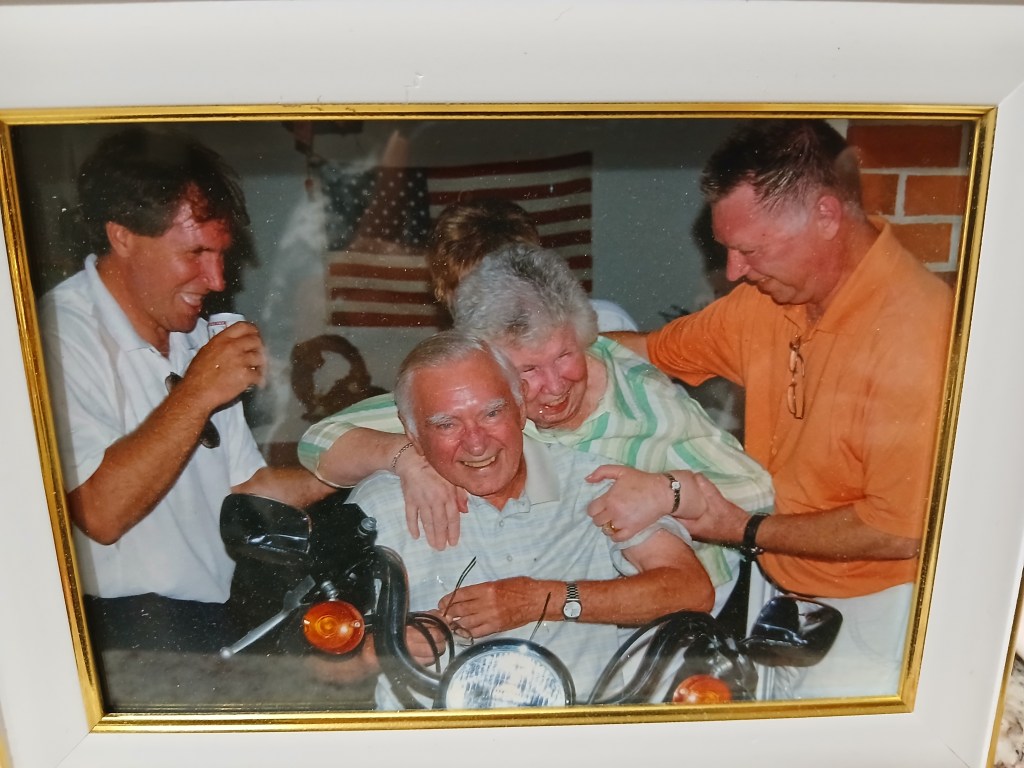
“The comfort level was really high,” Walter said. “It made the transition a little easier.”
Despite the challenges, there were moments of joy. The facility hosted events and had a beautiful outdoor area where Walter and his family could visit. “It was a happy place for those years,” he shared.
But the financial toll was steep. The cost of care exceeded $100,000 a year, and Medicare only kicked in after the family’s savings were exhausted. Walter and his siblings did their best to guide their father and protect him financially. Tragically, he died suddenly in 2012 from a blood infection.
The family gathered at the nursing home to share the news with Lorraine. “She looked at us, confused, and asked, ‘Am I supposed to know him? Am I supposed to cry?’” Walter recalled. She no longer remembered her husband.
Robert and Michael were in high school when their grandmother’s decline began. Poker nights had been their special bond with their grandparents. “None of the other grandkids did it,” Walter said. “It was just Robert and Michael.” The connection ran so deep that Michael once got in trouble for playing poker in the school lunchroom – and taking kids’ lunch money.
“I told the principal, ‘You can’t blame me for that—you need to call his Nanny and Pop,’” Walter laughed.
But behind the laughter was a deeper pain. The boys were still grieving the loss of their mother, who had died of breast cancer just a few years earlier. “They went through a difficult six or seven years,” Walter said. “But she remembered them, and that made it easier.”
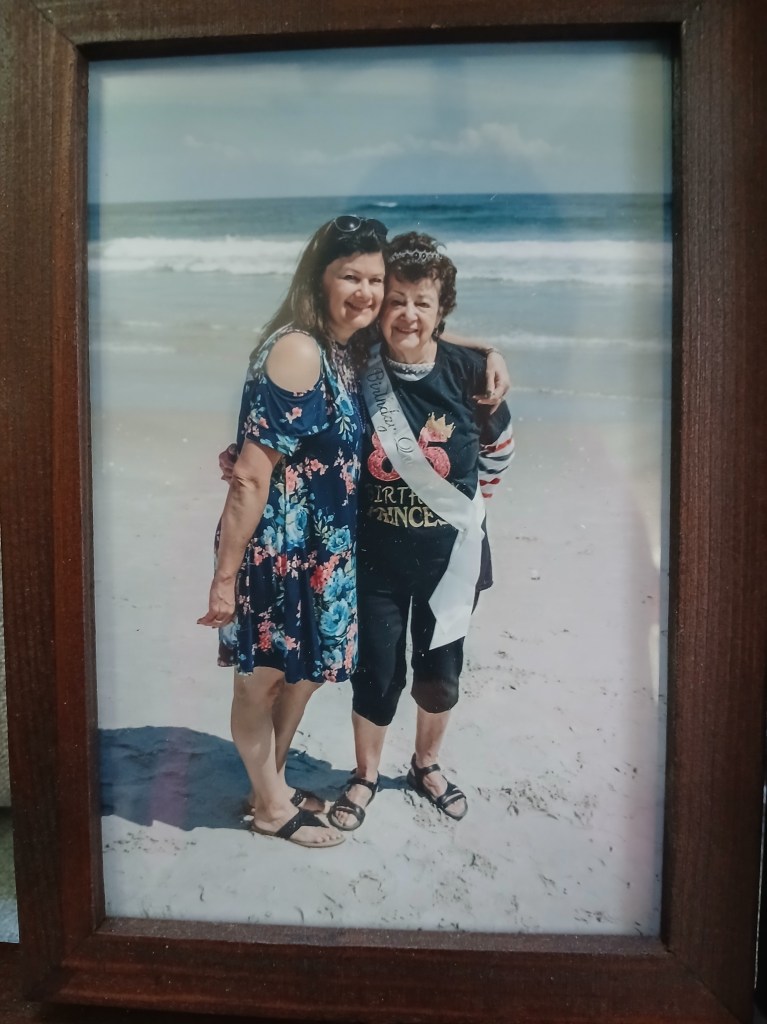
Janet Nowicki, Walter’s wife, also experienced the heartbreak of watching a parent fade. Her mother was diagnosed with pancreatic cancer in 2023 and passed away in 2024. Though the dementia wasn’t formally diagnosed, Janet recognized the signs she saw with Lorraine – forgetfulness, confusion, and eventually, the inability to recognize her own daughter.
“She would get very frustrated,” Janet said. “She’d look at me in a daze, and I knew she didn’t remember who I was by name.”
Walter and Janet had known each other since 1995, long before they married in 2010. Janet had been close with Walter’s family and even helped care for Lorraine during her illness. “We were already like family,” Janet said. “It was heartbreaking.”
Their shared experiences led them to the Alzheimer’s Association. Their financial advisor, Laura Banasiewicz of Allegacy Federal Credit Union, also served as executive leadership chair for the Walk to End Alzheimer’s – Winston-Salem. “She knew both Janet and my experience with Alzheimer’s and asked if we’d be interested in volunteering, and we said absolutely,” Walter said.
They’ve now been involved for six years, serving as logistics chairs for the Winston-Salem Walk to End Alzheimer’s for the past three. “We coordinate the day-of,” Walter explained. “DJs, speakers, vendors – everything that makes the event run smoothly.” They also support fundraising and corporate events throughout the year.
What has surprised Walter most is the passion of the people involved. “The dedication is unbelievable,” he said. “With Alzheimer’s, it goes deeper. Everyone is so committed to finding a cure.”
Walter and Janet have also tried to participate in clinical research. Walter applied to join a study at Wake Forest, but the program was full. “It’s been in my family – my mom and her two sisters,” he said. “We’re hoping another opportunity opens up.”
Their motivation is deeply personal – but also forward-looking. “Yes, you’re doing it in memory of a family member,” Walter said, “but let’s do it for the future – for ourselves, for our kids, for our grandkids. Hopefully by the time they’re older, dementia is preventable or curable.”
Walter and Janet’s story is one of heartbreak, resilience, and enduring love. While the past holds memories of loss, it also carries moments of deep connection and joy. Today, they look ahead with hope – grateful for the time they shared, and optimistic that the future will bring a cure. In the meantime, they are proud to be part of making an impact through Walk to End Alzheimer’s!
LIKE JANET and WALTER, WE ALL HAVE A REASON TO FIGHT FOR A WORLD WITHOUT ALZHEIMER’S DISEASE. Join your local Walk to End Alzheimer’s today as an individual, team, or sponsor.
Alzheimer’s Association Walk to End Alzheimer’s®:
The Alzheimer’s Association hosts 17 walks across North Carolina. The Alzheimer’s Association Walk to End Alzheimer’s is the world’s largest event to raise awareness and funds for Alzheimer’s care, support and research. Since 1989, the Alzheimer’s Association® mobilized millions of Americans in the Alzheimer’s Association Memory Walk®; now the Alzheimer’s Association is continuing to lead the way with Walk to End Alzheimer’s. Together, we can end Alzheimer’s.
Walk to End Alzheimer’s 2025 dates in North Carolina:
| Alamance County | 9/27/25 |
| Asheville | 9/27/25 |
| Charlotte | 10/18/25 |
| Fayetteville | 10/25/25 |
| Gaston/Cleveland/Lincoln | 10/11/25 |
| Guilford County | 10/25/25 |
| Henderson County | 9/27/25 |
| Iredell Co. & Lake Norman | 9/27/25 |
| Jacksonville | 9/27/25 |
| Moore County | 9/13/25 |
| Mount Airy | 9/20/25 |
| New Bern | 10/18/25 |
| Rowan-Cabarrus | 10/4/25 |
| Unifour | 10/25/25 |
| Triangle (Raleigh-Durham) | 10/4/25 |
| Wilmington | 11/1/25 |
| Winston-Salem | 11/16/25 |

